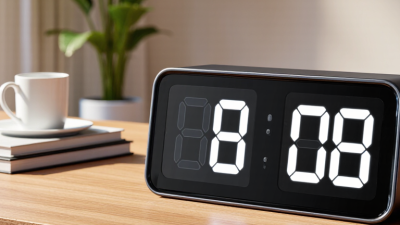
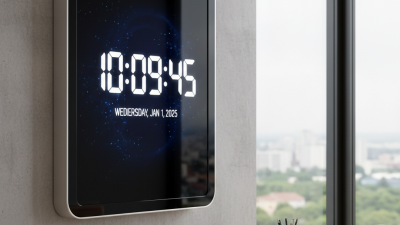
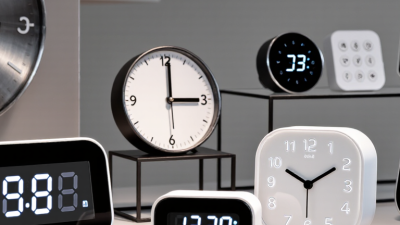
Top 10 Large Display Digital Clock Manufacturers in China
Large Display Digital Clock products serve a simple purpose: making time easy to read across a room, hall, shop floor, or outdoor site. In China, manufacturers offer varied designs, from compact LED units to oversized displays for factories, schools, transport areas, and public spaces. Visibility matters. Clear digits should remain legible from a useful distance, while brightness, viewing angle, and enclosure quality shape everyday performance. Buyers also need to consider power options, time synchronization, mounting methods, customization, warranty terms, and technical support. These details can matter more than a polished product photo.
This guide introduces ten Chinese manufacturers associated with Large Display Digital Clock solutions and helps readers compare their product focus. The selection should not be treated as a universal ranking: needs differ between a quiet reception desk and a bright production floor. Reviewing published specifications, product images, relevant certifications, and customer support can reveal meaningful differences. Ask for the actual digit height, viewing distance, brightness controls, and installation requirements before requesting a quotation. Small details matter. Manufacturer claims still deserve checking. A sample or clear technical drawing may prevent mismatched expectations. This article offers a practical starting point, not a substitute for verifying specifications and support directly with each supplier. The shortlist may change as products and needs evolve.
Overview of Large Display Digital Clocks and Their Applications
Large-display digital clocks make time easy to read from across a room. They are commonly used in factory floors, school halls, hospitals, transport areas, and sports facilities. Clear digits can help staff coordinate shifts, lessons, appointments, or timed activities without stopping to check a handheld device. In a busy workshop, for example, a clock above a production line keeps the time visible even when workers are wearing gloves.
The display needs to suit its setting. Digit height, viewing distance, ambient light, and mounting position all affect readability. A bright display may work well in a sunlit station, but feel harsh in a dim corridor. Some clocks also show seconds, date, temperature, or countdowns; extra information is useful only when people can read it quickly. Simple is often better. That is easy to overlook.
Accuracy matters, too. A clock that is hard to set or maintain may gradually show the wrong time, which can create confusion across departments. Network synchronization can help larger facilities keep multiple displays aligned, while a standalone clock may be adequate for a small room. Power interruptions, glare, and viewing angles deserve practical checks before installation. No single display suits every space, and specifications on paper do not always predict what people will see from the far end of a hall.
Key Product Types and Technologies Used by Chinese Manufacturers
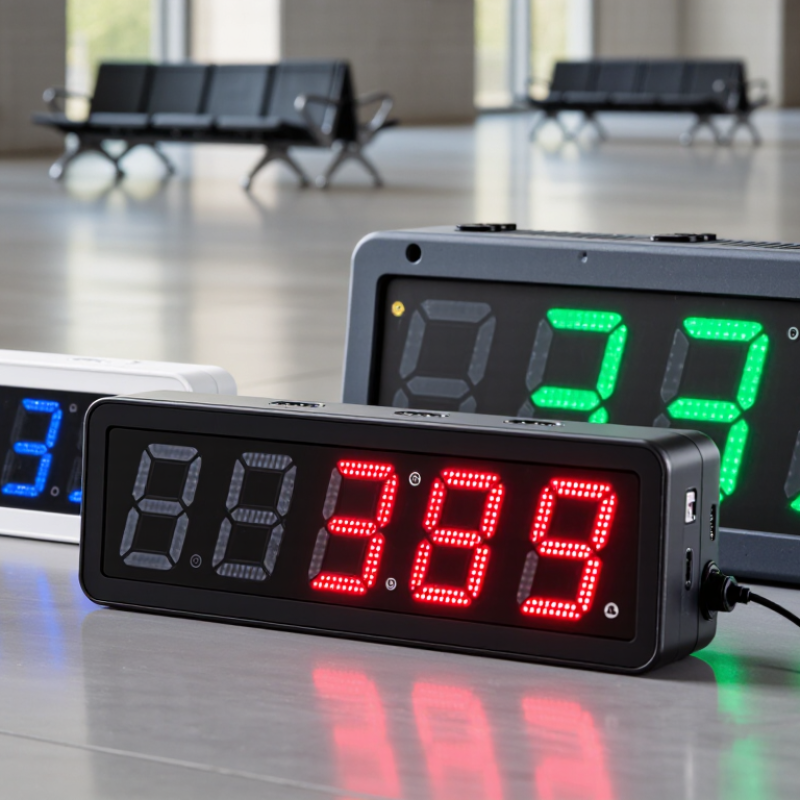
Chinese manufacturers commonly build large-display digital clocks around three formats: seven-segment LED digits, LCD panels, and modular LED matrices. Seven-segment units suit factories, schools, and transport halls because bright red or amber numerals remain readable from a distance. LCD models use less power and can combine time, date, temperature, and humidity on one screen. Modular panels allow larger digits, but they need careful calibration to avoid uneven brightness.
The technology choices reflect wider display demand, though clock sales are not measured separately. Grand View Research estimated the global digital signage market at USD 28.83 billion in 2023 and projected an 8.1% compound annual growth rate from 2024 to 2030. That figure covers many display products, not digital clocks. It still signals demand for clearer, more adaptable screens. In practice, manufacturers may offer network time synchronization, backup batteries, automatic brightness control, and wired or wireless control. Simple, dependable features matter.
Environmental conditions shape product design. A clock in a sunlit station needs stronger contrast than one in a quiet office. Outdoor models may use sealed housings and temperature-resistant components; indoor models often prioritize slim cases and low power use. One detail is easy to miss: a large display can look impressive in a catalog yet become hard to read at an angle. Buyers should check viewing distance, ambient light, and refresh behavior in the actual installation space.
Criteria for Evaluating Large Display Digital Clock Manufacturers
When comparing large display digital clock manufacturers in China, assess the clock in the space where it will actually be used. A display that looks clear in a showroom may be difficult to read across a bright factory floor. Check digit height, viewing angle, contrast, and brightness adjustment. Ask for a working sample or an on-site video showing the display from several distances. Small details matter.
Confirm how the clock keeps time and handles power interruptions. Request specifications for synchronization options, accuracy, backup behavior, and expected operating conditions. For outdoor or dusty locations, inspect the enclosure rating and ask how cable entries and mounting points are protected. Ask about production checks, such as testing every display for segment failures and verifying timekeeping before shipment. A written test record is more useful than a broad quality claim.
Review customization carefully. Can the supplier match required dimensions, mounting methods, time formats, or communication interfaces? Ask for drawings before approving a production run. Also clarify lead times, spare-part availability, warranty coverage, and who responds to technical questions after delivery. Compare these answers with sample documents and actual test results, not just sales promises. Some specifications may still be unclear. That deserves a follow-up. A reliable evaluation leaves room to question assumptions, especially when the clock must remain readable and accurate throughout long operating shifts.
Top 10 Large Display Digital Clock Manufacturers in China
Choosing among the top 10 large display digital clock manufacturers in China requires more than comparing product photos. A clock may look bright in a showroom yet become hard to read under strong daylight or from across a factory floor. Check the digit height, viewing distance, brightness adjustment, and display angle. Ask whether the unit supports the timing source and mounting method your site needs. These details affect daily use.
Manufacturing experience shows in practical choices: sturdy housings, clear wiring diagrams, consistent display color, and accessible controls. Request sample specifications and inspect a working unit for flicker, uneven digits, and audible noise. Small details matter. Also ask how each manufacturer tests finished clocks and handles custom dimensions or installation questions. A low quote is not always the best value; however, elaborate features may add little if the clock only needs to show local time. Compare responses, not just brochures. Some information may remain unclear until a sample is tested in the actual room, so leave time for that check. A careful shortlist balances readability, reliability, and support with the realities of the installation.
Manufacturing Capabilities and Market Trends in China
China’s large-display digital clock sector draws on a broad electronics and metalworking supply chain. Manufacturers commonly combine LED modules, control boards, power systems, and fabricated cabinets in one production workflow. Some facilities handle PCB assembly and aging tests in-house; others rely on specialist suppliers. Buyers should verify which steps are actually controlled by the factory.
Details matter. For clocks installed in stations, factories, or campuses, viewing distance affects digit height, brightness, and viewing angle. Outdoor projects also need suitable enclosures and careful thermal design. Network time synchronization, including NTP or satellite-based inputs, is increasingly requested for systems spread across multiple buildings. A clear test report is more useful than a feature list.
Market demand is shifting toward connected displays, customized formats, and lower maintenance needs. Modular LED panels can simplify repairs, while remote monitoring may help teams spot faults earlier. Yet integration is not always seamless. Ask how firmware updates are managed, whether replacement modules match later production batches, and what happens if a controller fails. Sample units can look consistent; long-term batch consistency still deserves scrutiny.