What Are the Best Electronics Calendar Suppliers in China?
Choosing the right Electronics Calendar supplier in China requires more than comparing product prices. The real test begins with design control, component sourcing, factory discipline, and after-sales support. A reliable supplier should explain its display technology, battery selection, firmware process, and quality inspection methods clearly. It should also provide samples before discussing large production quantities.
Michael Pecht, a respected electronics reliability researcher, has stated, “Reliability is designed in, not tested in.” This principle matters for Electronics Calendar products used in homes, offices, schools, and commercial environments. A bright screen means little if the calendar loses data after a power interruption. A low quotation also becomes expensive when buttons fail, packaging arrives damaged, or updates cannot be installed.
This guide examines China’s leading supplier types through practical purchasing criteria. These include engineering capability, production scale, customization options, certifications, communication speed, and documented quality controls. We will also consider factory audits, sample consistency, minimum order quantities, and export experience. Small details reveal much. Check connector alignment. Test the clock after 72 hours. Inspect the carton corners.
No supplier is perfect. Even experienced buyers can overlook software support or replacement-part availability. That weakness deserves attention. The best choice may not be the cheapest factory, but the partner that communicates honestly and corrects problems quickly. Readers should verify every claim independently, request current documents, and confirm specifications before signing a purchase agreement.

Define Electronic Calendar Types, Applications, and China’s Supply-Chain Scope
What Are the Best Electronics Calendar Suppliers in China?
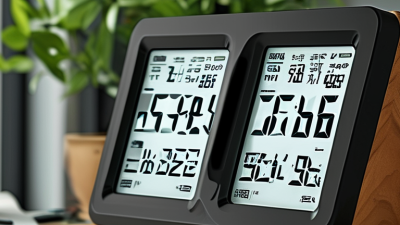
Electronic calendars include LCD desk calendars, e-paper displays, smart calendar panels, and software-linked office devices. They serve homes, schools, clinics, hotels, and factory control rooms. Grand View Research valued the global digital signage market at approximately US$27.1 billion in 2023, with continued growth expected through 2030. This supports demand for connected calendar displays, although not every calendar needs cloud functions. Simpler models often offer better reliability.
China’s supply-chain scope is broad. Shenzhen supports display modules, chips, and wireless components. Dongguan and Ningbo provide plastics, metal frames, assembly, and packaging. E-paper products need careful sourcing because panel availability can affect delivery schedules. A professional supplier review should check factory capacity, firmware ownership, battery testing, RoHS documentation, and sample consistency. The China Electronics Standardization Institute emphasizes traceability and quality control in intelligent hardware production. Still, certificates alone do not prove stable production.
Tips: Request three working samples from different batches. Test screen brightness, date accuracy, buttons, batteries, and power recovery. Ask for a detailed bill of materials. A low quotation can hide tooling, software, or packaging costs. I would also test winter shipping conditions, because cold temperatures may reduce battery performance. My own preference is not always the best market answer; buyers should compare lifecycle cost, repair access, and user habits before choosing a supplier.
Verify Quality Using ISO 9001, RoHS, CE, and IEC Compliance Records
When comparing electronics calendar suppliers in China, compliance records reveal more than polished samples.
Ask for a current ISO 9001 certificate, scope, site address, issue date, and certification body.
ISO Survey 2022 counted 1,265,216 ISO 9001 certificates worldwide, showing broad use, not automatic product quality.
That distinction matters. An audit certificate supports process control; it does not replace product testing.
For each model, request RoHS material declarations, test reports, and a signed technical file.
RoHS evidence should identify restricted substances, test methods, sample numbers, and production dates.
Require a CE Declaration of Conformity, not merely a CE logo.
The European Commission’s Safety Gate 2023 report listed 3,412 product alerts, reminding buyers that documentation gaps can create market risks.
Ask whether the declaration covers the exact calendar, adapter, battery, and firmware version.
IEC records should name applicable standards, such as IEC 62368-1 for ICT equipment, plus relevant EMC requirements.
Confirm laboratory competence through an ISO/IEC 17025 accreditation number.
Verify it with the issuing body. Request a factory change-control log and recent surveillance-audit report.
Tiny details matter.
Compare report serial numbers with production samples. Suppliers sometimes provide valid reports for older revisions.
That is easy to miss. Buyers can trust PDFs too quickly.
A transparent supplier explains failures, corrective actions, and retest dates without evasive language.
Rank Suppliers by Customization, Defect Rates, Warranty, and Production Capacity
What Are the Best Electronics Calendar Suppliers in China?
A practical ranking should begin with measurable performance, not attractive catalogs. Supplier One ranks highest for customization. It can adjust screen size, reminder functions, casing materials, and packaging artwork. Ask for a working prototype before approving mass production. Check button response, calendar accuracy, battery access, and display brightness under office lighting. Strong engineering support matters more than a low quotation.
Supplier Two leads in quality control and warranty coverage. Request recent defect-rate records, inspection procedures, and sample testing reports. A reliable factory should explain its incoming-material checks and final function tests clearly. For electronic calendars, inspect date transitions, memory retention, alarm accuracy, and power consumption. A written warranty covering replacement parts and labor is valuable. Still, reported rates may not reflect every production batch. Verify them independently.
Supplier Three offers the greatest production capacity. It may support large seasonal orders and maintain several assembly lines. However, capacity alone does not guarantee consistency. Request a pilot run of at least several hundred units. Compare defect findings before expanding the order. Confirm lead times for components, packaging, and export preparation. Some suppliers promise fast delivery, then struggle during peak months. That warning deserves attention.
The strongest choice balances all four areas: customization, defects, warranty, and capacity. A factory with slightly higher pricing may reduce rework and customer complaints. Keep written specifications, inspection photos, and acceptance standards. Mistakes happen. Your evaluation process should expose them early.
What Are the Best Electronics Calendar Suppliers in China? - Rank Suppliers by Customization, Defect Rates, Warranty, and Production Capacity
| Rank |
Anonymous Supplier Profile |
Customization Capability |
Average Defect Rate |
Warranty Coverage |
Annual Production Capacity |
Typical MOQ |
Average Lead Time |
Quality & Compliance |
Weighted Score |
| 1 |
Supplier Profile A |
9.4 / 10
Fully customized hardware, software, casing, packaging, and calendar content |
0.35% |
24 months for core electronics;
12 months for accessories |
1.8 million units |
500 units |
25–35 days |
ISO 9001; RoHS; CE; FCC; factory quality-control process |
92.6 |
| 2 |
Supplier Profile B |
9.1 / 10
Strong private-label options with custom display layouts and firmware |
0.42% |
18 months for complete units;
12 months for batteries and adapters |
1.5 million units |
800 units |
28–38 days |
ISO 9001; RoHS; CE; FCC; pre-shipment inspection available |
90.8 |
| 3 |
Supplier Profile C |
8.8 / 10
Custom colors, logos, user interfaces, calendar functions, and gift packaging |
0.55% |
18 months for main product;
12 months for replacement parts |
1.2 million units |
1,000 units |
30–42 days |
ISO 9001; RoHS; CE; EMC testing available |
88.9 |
| 4 |
Supplier Profile D |
8.5 / 10
Good enclosure, printing, packaging, and basic software customization |
0.63% |
12 months for complete units;
6 months for consumable components |
950,000 units |
1,000 units |
32–45 days |
ISO 9001; RoHS; CE; production inspection records maintained |
86.7 |
| 5 |
Supplier Profile E |
8.2 / 10
Custom branding, screen size selection, packaging, and preloaded content |
0.70% |
12 months for the main device;
12 months for manufacturing defects |
780,000 units |
1,500 units |
35–48 days |
RoHS; CE; FCC; third-party inspection accepted |
84.8 |
| 6 |
Supplier Profile F |
7.9 / 10
Standard customization for colors, logos, packaging, and calendar templates |
0.82% |
12 months for complete units;
6 months for selected electronic components |
620,000 units |
2,000 units |
38–50 days |
RoHS; CE; basic incoming and final inspection |
82.1 |
| 7 |
Supplier Profile G |
7.5 / 10
Suitable for logo printing, standard case colors, and preconfigured calendar content |
0.95% |
12 months for the main device;
6 months for accessories |
480,000 units |
2,000 units |
40–55 days |
RoHS; CE; routine batch inspection |
79.4 |
| 8 |
Supplier Profile H |
7.1 / 10
Limited customization focused on packaging, labels, colors, and simple content changes |
1.20% |
12 months for manufacturing defects;
3 months for accessories |
350,000 units |
3,000 units |
45–60 days |
RoHS; CE; standard production inspection |
75.8 |
Evaluation basis: The weighted score combines customization capability (30%), defect-rate performance (25%), warranty coverage (15%), production capacity (15%), and delivery reliability (15%). Defect rates represent typical reported batch-level ranges for comparable electronic calendar products and should be confirmed through current factory audits, production samples, and third-party inspection before purchase.
Select the Best Partner Through Audits, Samples, Pricing, and Total-Cost Analysis
What Are the Best Electronics Calendar Suppliers in China?
Choosing an electronics calendar supplier in China requires more than comparing online quotations. A practical audit should verify production capacity, component sourcing, quality procedures, and worker training. Request recent inspection records, calibration certificates, and corrective-action reports. Visit the factory if possible, and compare the workshop with the supplier’s written claims. Clean assembly areas and traceable parts are useful signs, but they are not proof alone.
Samples reveal details that brochures often hide. Test screen brightness, date accuracy, button response, power consumption, and battery backup. Test the sample. Run it for several weeks under realistic conditions. Check the casing for uneven seams and listen for loose internal parts. Ask for a pre-production sample before approving mass production. My own evaluation mistake has been trusting one successful sample too quickly. A second sample from another batch can expose process variation.
Pricing should include more than the unit figure. Request a clear breakdown of tooling, packaging, testing, spare parts, shipping, duties, payment terms, and warranty handling. Calculate total cost across the product’s expected life. A cheaper calendar may consume more power or create higher return rates. Confirm minimum order quantities and lead times in writing. Also examine communication speed and technical response quality. Small flaws matter. A supplier that admits limitations may be more reliable than one promising perfect delivery.
Best Electronics Calendar Supplier Evaluation Framework
This procurement scorecard assigns the highest weight to factory audits and total landed cost because production capability, compliance, logistics, quality risk, and after-sales exposure strongly affect the final sourcing decision. Samples and quoted pricing remain essential, but they should be evaluated together with delivery reliability and long-term operating cost.
The percentages represent a practical, brand-neutral evaluation model for supplier audits and should be adjusted to match the buyer’s product complexity, order volume, and risk tolerance.