How to Use a Digital Calendar to Boost Your Productivity in 2025
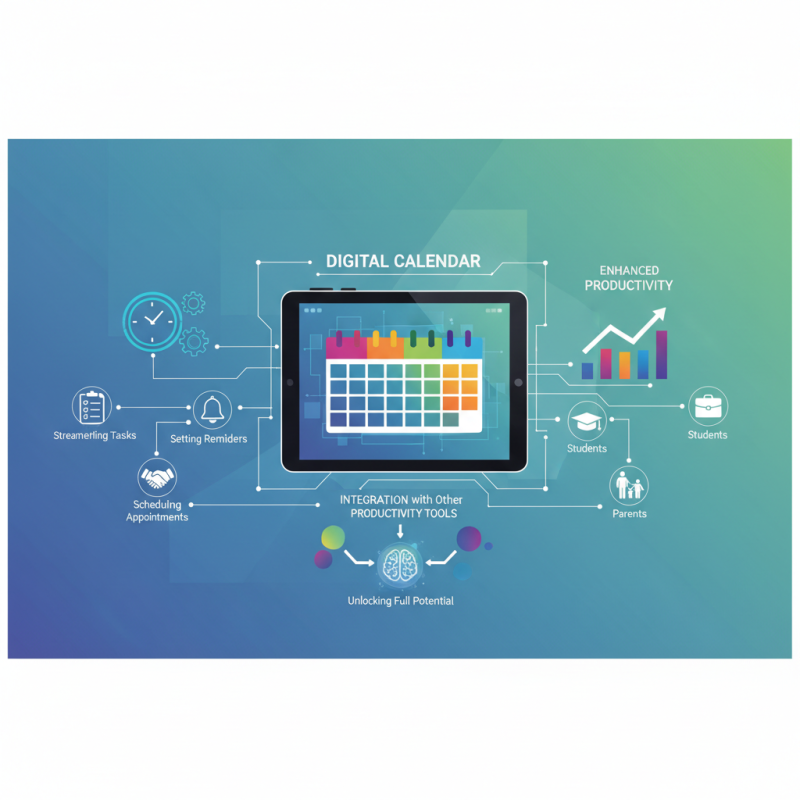
In an increasingly fast-paced world, harnessing the power of a Digital Calendar has become essential for boosting productivity, especially as we navigate the challenges of 2025. As many individuals and professionals seek to optimize their time and enhance their organizational skills, a Digital Calendar emerges as a formidable tool. By streamlining tasks, scheduling appointments, and setting reminders, this innovative approach enables users to take control of their daily lives, ensuring that important deadlines and commitments are never overlooked.
The versatility of a Digital Calendar allows for customization and adaptability, catering to both individual preferences and specific workflow needs. Whether you are a student juggling classes, a professional managing numerous projects, or a busy parent coordinating family commitments, a Digital Calendar can help you visualize your schedule clearly and effectively. Furthermore, with ongoing advancements in technology and integration with other productivity tools, the Digital Calendar is set to become even more indispensable as we embrace new methods of work and collaboration in the coming year. By mastering its features and functionalities, users can unlock the full potential of their time, paving the way for enhanced productivity and efficiency in their everyday routines.
Benefits of Using a Digital Calendar for Productivity Enhancement
Using a digital calendar can significantly enhance your productivity by providing organization, efficiency, and flexibility in managing tasks and appointments. One of the primary benefits of employing a digital calendar is the ability to synchronize tasks across multiple devices. This means that whether you are at your desk, on your phone, or using a tablet, your schedule is consistently up-to-date. This seamless integration allows you to access your commitments anytime and anywhere, reducing the chances of missing important deadlines or meetings.
Another advantage of a digital calendar is its capability to set reminders and alerts for tasks and appointments. This feature ensures that you stay on track with your responsibilities, giving you the necessary prompts to complete projects in a timely manner. Additionally, many digital calendars offer color-coding options or categorization tools, allowing you to visualize your schedule and prioritize tasks effectively. By organizing your activities in this manner, you can focus more on essential projects and reduce the cognitive load of managing a busy schedule.
Finally, digital calendars often include collaboration features that facilitate teamwork. By sharing calendars with colleagues or family members, everyone stays informed of mutual commitments and can coordinate their schedules more efficiently. This communal aspect fosters better communication and planning, making it easier to achieve collective goals while also providing individuals with the structure they need to manage their personal tasks. Overall, the integration of various features in digital calendars empowers users to optimize their time management and enhance productivity.
Setting Up Your Digital Calendar for Maximum Efficiency
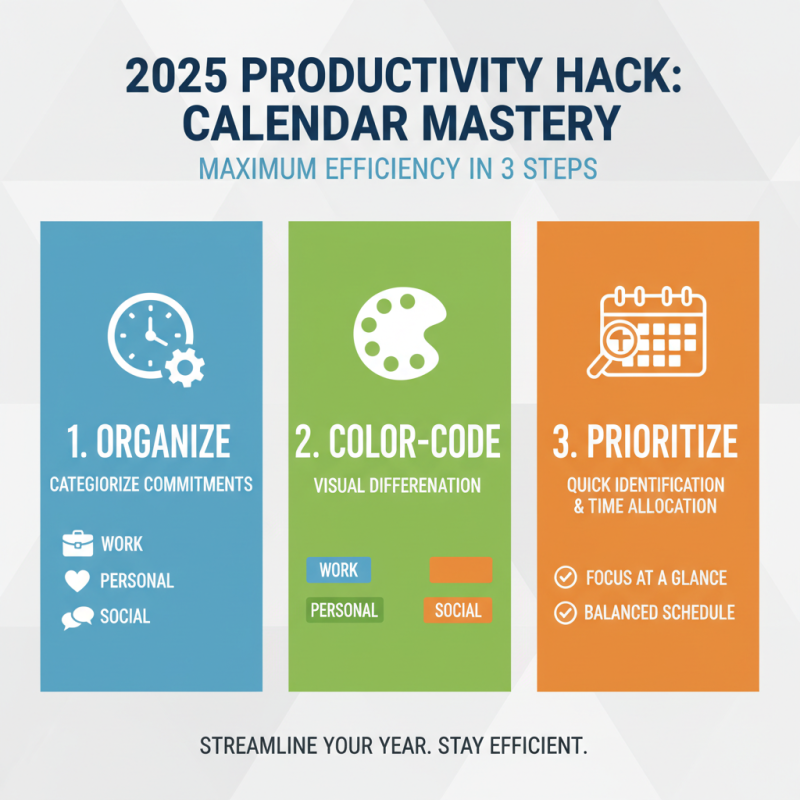
Setting up your digital calendar for maximum efficiency is crucial in maintaining productivity in 2025. Start by organizing your calendar into distinct categories, such as work, personal, and social commitments. By color-coding these categories, you can quickly identify areas that require your attention at a glance. This visual differentiation helps in prioritizing tasks and ensuring that you allocate appropriate time slots for each aspect of your life.
Tips: Utilize recurring events for regular activities like meetings or fitness classes to simplify scheduling. This not only saves time but also allows you to focus on new tasks without forgetting your regular commitments. Additionally, set reminders for important deadlines or events to ensure you stay on track.
Another effective strategy is leveraging the features of your digital calendar to enhance collaboration. Share specific calendars with colleagues or family members to keep everyone informed about shared events or deadlines. This not only fosters transparency but also helps prevent scheduling conflicts.
Tips: Integrate your calendar with task management apps to create a seamless workflow. By linking tasks to your calendar events, you can ensure you're always aware of what needs to be accomplished on any given day.
Integrating Task Management Tools with Your Digital Calendar
Integrating task management tools with your digital calendar can significantly enhance your productivity in 2025. By linking these tools, you create a streamlined workflow that allows for better organization and prioritization of tasks. Start by choosing a task management system that complements your calendar. This synergy enables you to visualize your tasks alongside your scheduled appointments, providing a comprehensive overview of your day. You can assign deadlines, set reminders, and even categorize tasks based on urgency or project relevance directly within your calendar interface.
Moreover, utilizing features such as color coding and tagging can further simplify navigation and help maintain focus. For instance, you can dedicate specific colors to different projects or types of tasks, making it easier to identify what needs immediate attention. Additionally, many digital calendars support repetitive task entries, enabling you to plan future activities without the repetitive burden of manual input. By keeping your tasks and schedule in one place, you reduce the likelihood of oversight and enhance your ability to keep track of progress, thereby fostering a more productive environment as you navigate through a busy year.
Productivity Boost: Digital Calendar Usage in 2025
Creating Effective Time Blocks for Focused Work Sessions
Creating effective time blocks for focused work sessions is a strategic approach that can significantly enhance productivity, especially in the fast-paced environment of 2025. A study by the Bureau of Labor Statistics indicates that over 80% of knowledge workers experience interruptions throughout their workday, leading to time loss and decreased productivity. By utilizing a digital calendar, individuals can allocate specific time blocks dedicated to focused work, minimizing distractions and enhancing concentration. Research has shown that the Pomodoro Technique, where one works for 25 minutes followed by a 5-minute break, can increase productivity by up to 25% compared to traditional work methods.
Incorporating time blocking into one's digital calendar can also aid in better time management. According to a report from the Harvard Business Review, the effective use of calendar time can help people achieve a 20% increase in overall work efficiency when tasks are organized in predefined slots. By outlining the work tasks and scheduling them in blocks, individuals can better visualize their workload, improve task prioritization, and ensure that dedicated time is allocated for high-impact activities. Ultimately, this method not only helps manage time more effectively but also enables a clearer focus on deep work, leading to better outcomes in professional projects and personal growth.
How to Use a Digital Calendar to Boost Your Productivity in 2025 - Creating Effective Time Blocks for Focused Work Sessions
| Time Block |
Focus Area |
Duration |
Goal |
Tools Used |
| 9:00 AM - 10:00 AM |
Writing |
1 Hour |
Draft blog post |
Google Docs |
| 10:30 AM - 11:30 AM |
Meetings |
1 Hour |
Team sync-up |
Zoom |
| 1:00 PM - 2:00 PM |
Research |
1 Hour |
Market analysis |
Notion |
| 3:00 PM - 4:00 PM |
Creative Work |
1 Hour |
Design graphics |
Adobe Illustrator |
| 4:30 PM - 5:30 PM |
Planning |
1 Hour |
Weekly overview |
Trello |
Strategies for Regularly Reviewing and Adjusting Your Calendar
Regularly reviewing and adjusting your digital calendar is essential for maximizing productivity in 2025. According to a study by the American Psychological Association, individuals who incorporate weekly planning sessions experience a 25% increase in productivity compared to those who don’t. Setting aside time each week to evaluate your schedule allows you to adapt to changing priorities, ensuring that your calendar reflects your current goals and commitments. During these sessions, assess completed tasks, upcoming deadlines, and any unanticipated events that may require adjustments.
Moreover, incorporating monthly reviews can further enhance your organizational effectiveness. Research from the National Bureau of Economic Research indicates that people who engage in monthly reflections are 30% more likely to stay on track with long-term projects. These sessions should focus on assessing progress towards your objectives, identifying patterns in your productivity, and making structural adjustments to optimize your time management. Additionally, consider utilizing digital tools that allow for easy drag-and-drop functionality to reschedule tasks effortlessly, helping to maintain a realistic and achievable calendar. By establishing a rhythm of regular reviews, you create an adaptable framework that promotes sustained focus and efficiency throughout the year.