Top 10 Fun and Educational Kids Clocks to Help Your Child Tell Time
Teaching children how to tell time is an essential skill that can boost their independence and understanding of daily routines. A well-designed kids clock can not only aid in this learning process but also engage young minds in a fun and interactive way. With vibrant colors, appealing designs, and intuitive features, the right clock can transform the experience of learning to tell time into an enjoyable adventure.
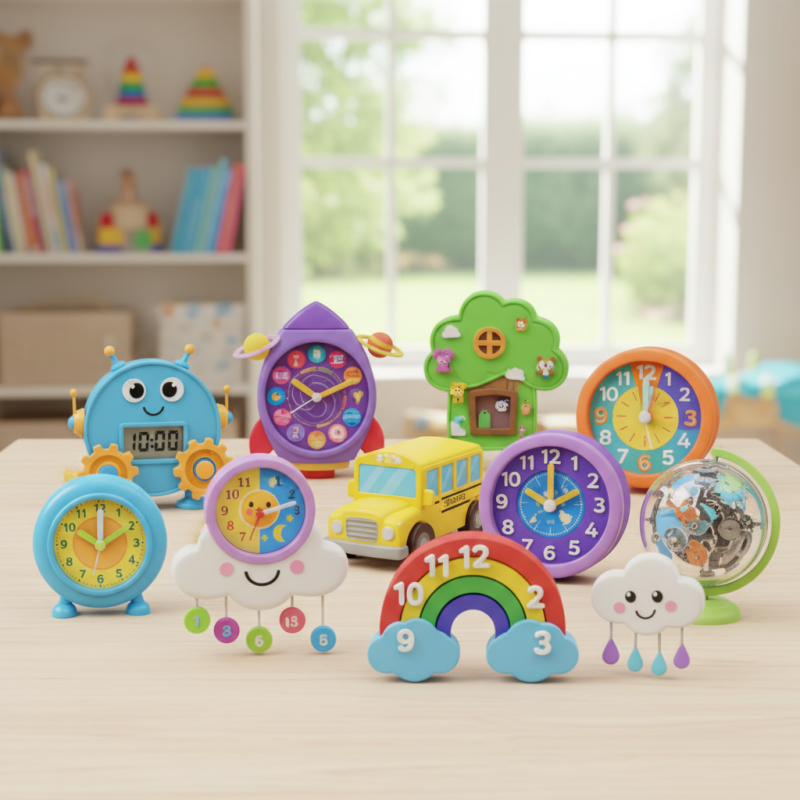
In this guide, we will explore the top ten fun and educational kids clocks that make time-telling a breeze for young learners. These clocks have been thoughtfully selected to encourage curiosity and understanding while adapting to various learning styles. By incorporating playfulness into the educational process, these clocks help children grasp the concept of time in a way that feels natural and enjoyable. Whether you're looking for a clock that uses visuals, sounds, or hands-on interaction, there's something here for every child, making the journey to time mastery both effective and entertaining.
Top 10 Fun and Educational Kids Clocks to Help Your Child Tell Time
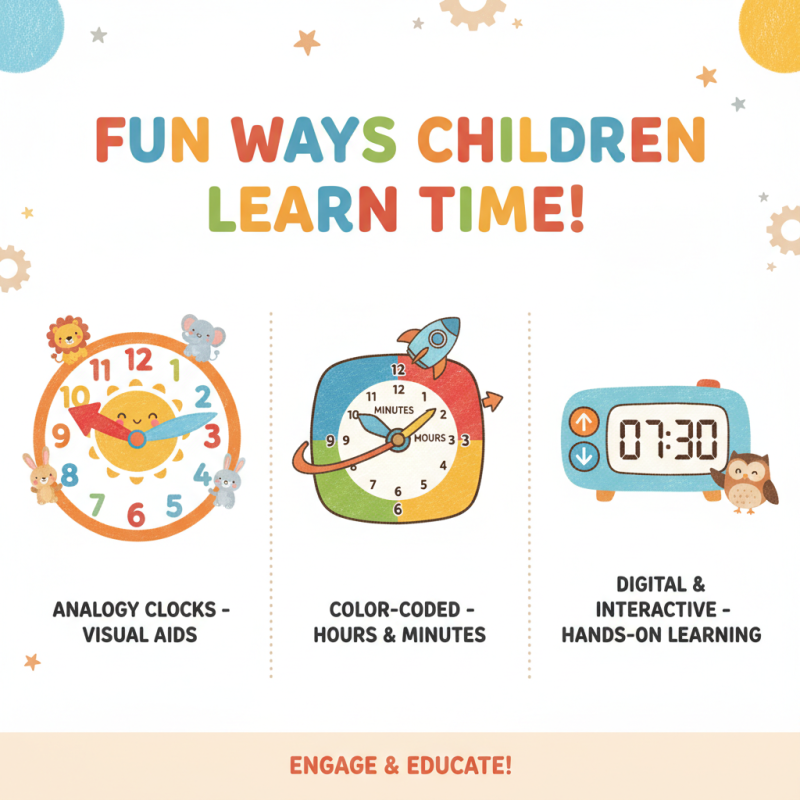
Teaching children to tell time can be a fun and engaging process with the right tools. Fun and educational kids' clocks come in a variety of designs that capture children’s interest while promoting learning. From colorful, animated patterns to interactive features, these clocks are designed to make the challenge of reading time less daunting. Many clocks use visual aids, such as pictures and movable hands, to help children understand the concept of hours and minutes in an engaging manner.
Incorporating these clocks into daily routines can enhance a child's learning experience. For instance, setting a clock to specific times and asking kids to perform tasks by these times can reinforce their understanding of time management. Additionally, some clocks include games or activities that challenge children to answer questions about time, boosting their confidence and skills. Ultimately, selecting the right clock can ignite a child's curiosity, making the journey of learning to tell time both enjoyable and educational.
Importance of Learning to Tell Time for Child Development
Learning to tell time is a fundamental skill that plays a significant role in a child's development. Understanding how to read a clock helps children grasp abstract concepts like time management and scheduling, which are essential in everyday life. This skill fosters independence, as children learn to keep track of their own routines, such as homework, playtime, and bedtime. Mastering time-telling encourages responsibility and planning, valuable traits that contribute to successful outcomes in school and personal activities.
Moreover, the cognitive benefits of learning to tell time extend beyond mere functionality. It enhances mathematical understanding as children familiarize themselves with numbers, fractions, and intervals. Recognizing the movement of the hour and minute hands also develops spatial reasoning and critical thinking skills. These cognitive developments lay a strong foundation for future learning, enabling children to tackle more complex mathematical concepts with confidence. Emphasizing the importance of telling time not only equips children with a practical skill but also enriches their overall intellectual growth.
Top 10 Fun and Educational Kids Clocks to Help Your Child Tell Time
| Clock Name |
Type |
Features |
Age Suitability |
Price Range |
| Learning Clock |
Analog |
Color-coded hour and minute hands |
4-8 years |
$15 - $25 |
| Digital Time Trainer |
Digital |
Interactive quizzes |
5-10 years |
$20 - $35 |
| Wooden Teaching Clock |
Analog |
Movable hour and minute hands with numbers |
3-6 years |
$10 - $20 |
| Smart Clock |
Smart |
Voice guide, programmable alarms |
6-12 years |
$50 - $80 |
| Puzzle Clock |
Analog |
Jigsaw pieces for learning time |
3-8 years |
$12 - $18 |
| Glow in the Dark Clock |
Analog |
Glows in the dark for night-time learning |
4-10 years |
$15 - $30 |
| Learning Clock with Music |
Analog |
Plays tunes upon setting the time |
3-7 years |
$18 - $28 |
| Interactive LED Clock |
Digital |
Colorful LED lights that show time |
5-10 years |
$30 - $45 |
| Animal Clock |
Analog |
Animal characters to tell time |
3-8 years |
$14 - $22 |
| Color Changing Clock |
Digital |
Changes color based on time |
5-12 years |
$25 - $40 |
Features to Look for in Educational Clocks for Kids
When selecting educational clocks for kids, there are several key features to consider that enhance their learning experience. According to a 2022 report by the National Association for the Education of Young Children (NAEYC), incorporating hands-on learning tools can significantly improve children's understanding of complex concepts such as time management. One essential feature of a good educational clock is a clear and visually engaging design. Clocks that use bright colors and large numbers can help capture children's attention and make learning the fundamentals of telling time more enjoyable. This aligns with findings from the American Academy of Pediatrics (AAP), which emphasize that visual aids can boost engagement and retention in early childhood education.
Another important aspect is the inclusion of interactive elements. Clocks with movable hands, audible sounds, or accompanying apps can create an immersive learning experience, promoting active participation. Research from the Early Childhood Research Quarterly indicates that interactive learning tools improve cognitive skills by an average of 30% in preschool-aged children. Providing options for both analog and digital displays can also cater to varying levels of understanding among kids, further supporting their developmental needs. Ultimately, choosing a clock that is not only educational but also engaging and adaptable is key to fostering a child's ability to tell time effectively.
Top 10 Kids Clocks: Criteria for Selection Based on Educational Value
When selecting kids' clocks, educational value is a primary criterion that can significantly impact a child's learning experience.
First and foremost, the design of the clock should facilitate an understanding of both analog and digital time formats.
Clocks featuring a traditional clock face with clearly marked hours and minutes help children grasp the concepts of time-telling, while clocks that also display the digital format reinforce these lessons, catering to various learning styles.
Another important consideration is the interactivity of the clock.
Clocks that incorporate games or activities can engage children more effectively, fostering a playful environment for learning.
For instance, some clocks allow kids to manipulate the hands to match specific times, promoting hands-on learning.
Additionally, incorporating visual cues, such as color-coded sections for different parts of the day or illustrated scenarios showing time-related activities, can help children connect time with their daily lives, making the learning process both fun and relatable.
Ultimately, the ideal kids' clock should not only serve as a functional timekeeper but also act as a tool for cognitive growth and exploration.
The Role of Interactive Learning in Teaching Time to Children
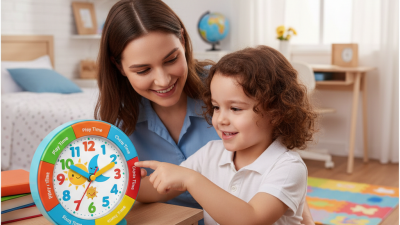
Interactive learning plays a crucial role in teaching children how to tell time. By engaging children with hands-on experiences and visual aids, they develop a deeper understanding of numbers, relationships, and the concept of time. For instance, using analog clocks with movable hands allows kids to physically manipulate the clock to see how time progresses, reinforcing the connection between the hour and minute hand and the passage of time.
In addition to physical clocks, interactive games and activities can enhance learning. Incorporating storytelling, songs, or even digital applications that reward children for mastering time-telling skills makes the process enjoyable and memorable. These methods not only cater to various learning styles but also create an environment where children feel motivated to explore and ask questions. Such engagement fosters curiosity and reinforces the relevance of time in their everyday lives, making the learning experience both fun and educational.
Top 10 Fun and Educational Kids Clocks to Help Your Child Tell Time
Conclusion
In the article "Top 10 Fun and Educational Kids Clocks to Help Your Child Tell Time," the importance of teaching children how to tell time is emphasized as a critical aspect of their development. Learning to read clocks not only enhances their numerical skills but also helps them understand the concept of time management. When selecting educational clocks for kids, parents should look for features that promote engagement and interactivity, making the learning experience enjoyable and effective.
The article also highlights the current trends in children's time-telling products, which often integrate technology and interactive elements to facilitate learning. These innovative approaches not only make learning to tell time fun but also cater to the diverse ways children engage with educational materials. By focusing on the educational value of Kids Clocks, parents can choose the best tools to support their child's growth in this essential life skill.