How to Choose the Best Electronic Clock for Your Home and Office Needs
Selecting the right electronic clock for your home or office is a decision that can significantly impact your daily life, productivity, and time management. According to a market research report by Grand View Research, the global electronic clock market is expected to reach USD 3.12 billion by 2025, indicating a growing demand for innovative and multifunctional timekeeping solutions. With various designs, features, and functionalities available, choosing the best electronic clock requires careful consideration of one’s specific needs and preferences.
In today’s fast-paced environment, the role of an electronic clock extends beyond merely telling time; many models now incorporate advanced features such as alarms, temperature displays, and connectivity with smart devices. Research from Statista suggests that around 42% of consumers prioritize digital connectivity in their purchasing decisions, underscoring the trend toward integrated technology in everyday items. Therefore, understanding key features and functionalities, along with personal usage habits, is critical to making an informed choice that enhances your space while meeting your timekeeping preferences.
Determining Your Requirements: Home vs Office Needs
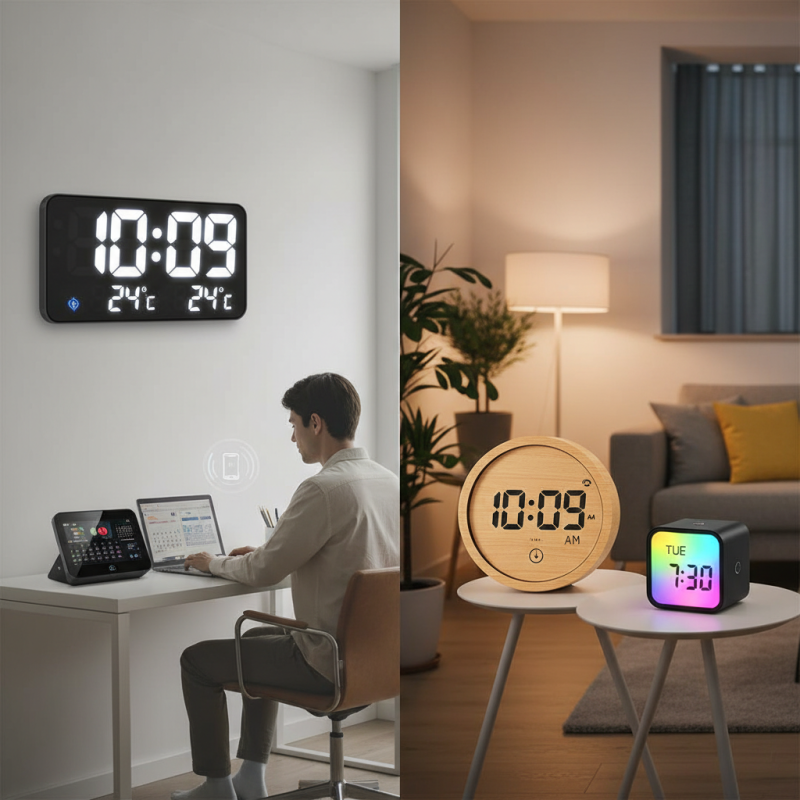
When selecting an electronic clock, understanding your specific needs for home or office use is crucial. In a home setting, the clock often serves as a decorative element while also providing functionality. Consider your lifestyle; for instance, if you enjoy hosting guests, a stylish wall clock that complements your decor can enhance the ambiance of your living space. Additionally, features like an alarm function may be beneficial for waking up on time or reminding you of important tasks throughout the day. Brightness settings become important as well; you might prefer a clock with adjustable display levels to ensure visibility without disrupting the cozy atmosphere of your home.
In contrast, an office environment demands a different set of functionalities. Accuracy and visibility are paramount, especially in busy workplaces where time management is essential. A digital clock with a large display can help employees keep track of time from various angles across the office. Furthermore, consider whether the clock should include features like a timer or stopwatch functionality, which can aid in productivity during meetings or work sessions. Lastly, the clock’s design should align with a professional aesthetic, contributing to an organized and efficient work environment without being distracting. Balancing these aspects will help you make an informed decision tailored to your specific requirements.
How to Choose the Best Electronic Clock for Your Home and Office Needs
| Feature |
Home Needs |
Office Needs |
| Display Type |
Analog/Digital |
Digital |
| Size |
Medium to Large |
Compact |
| Additional Features |
Alarm, Temperature |
Timer, Calendar |
| Power Source |
Battery/AC |
Battery/AC |
| Style |
Traditional |
Modern Sleek |
| Price Range |
$10 - $50 |
$20 - $100 |
Understanding Different Types of Electronic Clocks
When selecting an electronic clock for your home or office, it’s essential to understand the different types available on the market. Digital clocks are among the most common and offer a straightforward display of time, often including additional features such as alarms, temperature readings, and even calendar functions. These clocks can be found in various sizes and colors, making them easy to incorporate into diverse environments, from sleek offices to cozy living rooms.
Another popular option is the atomic clock, which synchronizes with a national time signal to ensure unparalleled accuracy. These clocks automatically adjust for daylight saving time, providing a hassle-free solution for those who prefer not to set their clocks manually. Additionally, wall clocks and desk clocks with LED or LCD displays come in a range of styles, incorporating both functionality and aesthetics. For a unique twist, consider alarms that use unconventional sounds or light-based wake-up systems, catering to different preferences and enhancing your overall experience of timekeeping.
Electronic Clock Types and Their Popularity
Key Features to Consider When Choosing an Electronic Clock
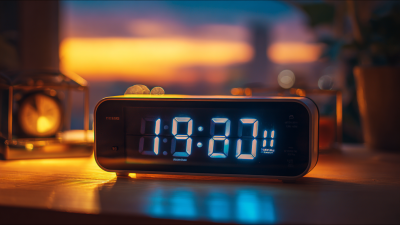
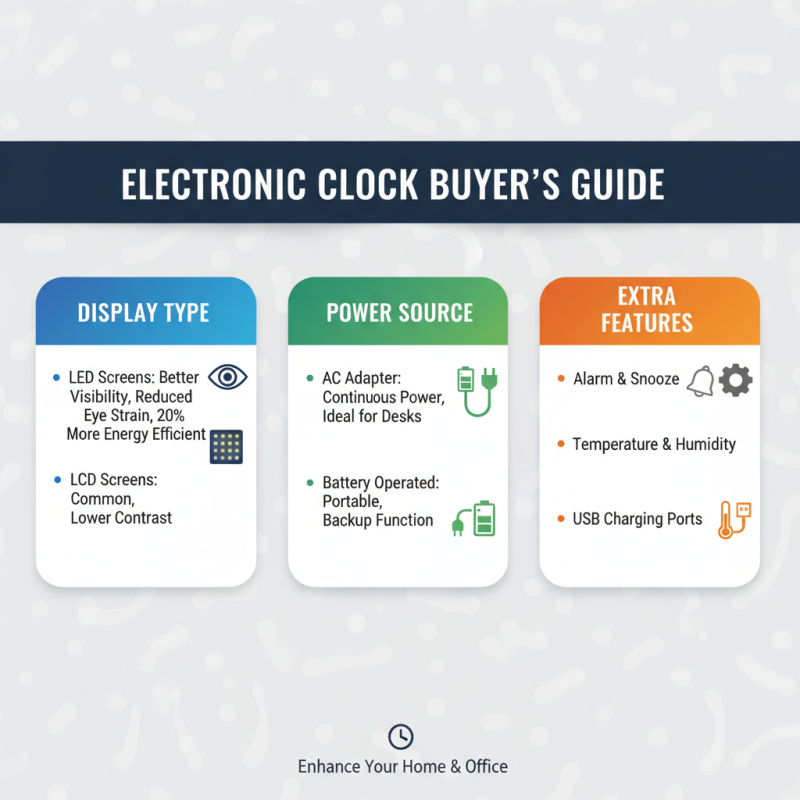
When selecting an electronic clock for your home or office, there are several key features to consider that can greatly enhance usability and functionality. One of the primary aspects to evaluate is the display type. LCD and LED screens are the most common, with studies indicating that LED displays offer higher visibility in various lighting conditions, reducing eye strain. A report from the International Journal of Optical Engineering highlights that an LED display can be up to 20% more energy-efficient than traditional LCDs, making it a superior choice for prolonged use.
Another critical feature is the clock's alarm and timer functionalities. Many modern electronic clocks come equipped with customizable alarms, which can cater to different schedules and preferences. According to a survey by the Consumer Electronics Association, nearly 60% of users prioritize alarm settings when choosing their clocks, emphasizing the importance of this feature in daily routines. Furthermore, consider additional functions such as temperature displays and smart connectivity options. Data from a recent market analysis suggests that more than 40% of consumers are interested in clocks that integrate with smart home systems, reflecting the growing trend towards automation and connectivity in our daily lives.
Ultimately, focusing on these essential features—display type and alarm functionalities—will help in selecting an electronic clock that not only fits your aesthetic preferences but also serves your practical needs effectively.
Evaluating Design and Aesthetic Considerations
When selecting an electronic clock for your home or office, design and aesthetic considerations play a crucial role in enhancing the overall ambiance of your space. A well-chosen clock can serve as both a functional tool for timekeeping and an eye-catching decorative element. Consider the color scheme and décor style of your environment; a clock that complements existing furnishings can create cohesion, while a bold statement piece can add a distinctive touch.
Tips: When evaluating the design, think about where the clock will be placed. For wall-mounted options, choose sizes that suit the wall space without overwhelming or underwhelming the area. If you prefer a desk clock, consider shapes and materials that align with your personal style—whether it's sleek modern minimalism or cozy rustic charm.
Additionally, consider the functionality of the design. Some clocks feature illuminated displays, which can be especially useful in low-light environments. Opt for designs that incorporate user-friendly interfaces, ensuring that changes to settings or alarms are easy to navigate. A clock should not only be aesthetically pleasing but also practical, seamlessly fitting into your daily routine.
Budgeting and Brand Reputation: Making an Informed Choice
When selecting the best electronic clock for your home or office,
budgeting and
brand reputation play crucial roles in making an informed decision.
Establishing a budget upfront helps to narrow down the choices and avoids overspending.
Electronic clocks can range from simple models to more sophisticated options with various features, so determining how much you are willing to spend helps to pinpoint the models that fit your needs without causing unnecessary financial strain.
In addition to budgeting, considering brand reputation is essential in ensuring quality and reliability.
Brands with a strong reputation often prioritize customer satisfaction and product durability.
Researching consumer reviews and ratings can provide insights into the performance and longevity of different models.
Established brands are likely to offer better customer service and warranties, adding peace of mind to your purchase.
By balancing your budget with a careful evaluation of brand reputation, you can confidently choose an electronic clock that not only suits your functional needs but also ensures reliability over time.