How to Choose the Best Elderly Clock for Seniors Needs?
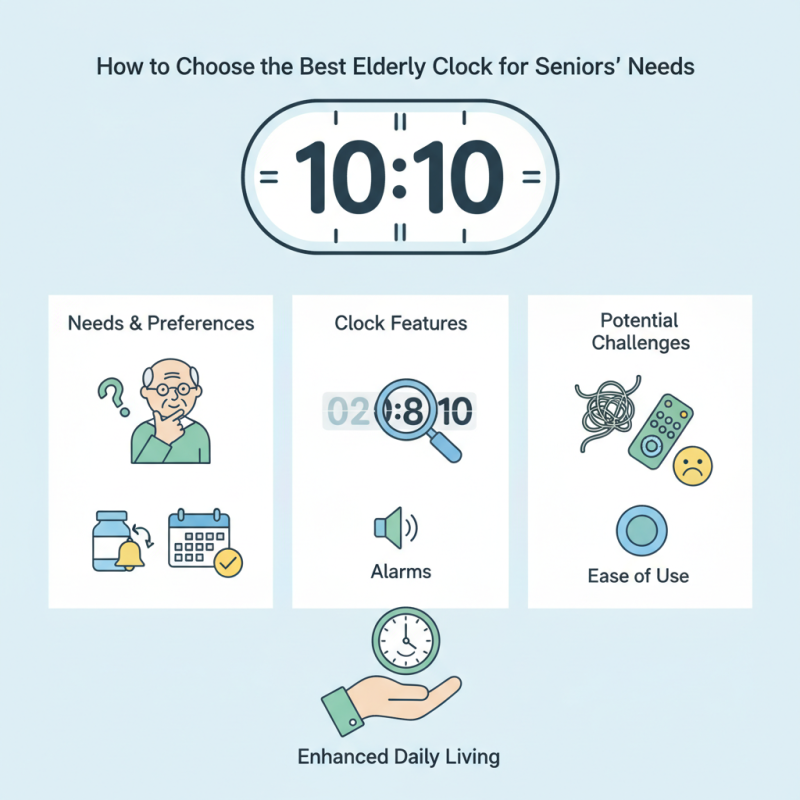
Choosing the right Elderly Clock is crucial for seniors. As we age, effective time management becomes vital. A well-designed clock can help seniors maintain daily routines and improve independence.
Different features are available in elderly clocks. Some models offer large, easy-to-read digits. Others include alarms for medications or appointments. However, selecting a suitable clock can be overwhelming. It’s essential to consider individual needs and preferences.
Many elders struggle with technology. A simpler design might be best for them. Some clocks lack clarity or user-friendly buttons, leading to frustration. Reflecting on personal experiences can aid in making better choices. Investing in the right Elderly Clock enhances daily living, bringing ease and comfort to seniors’ lives.
Understanding the Unique Needs of Seniors in Timekeeping
Choosing the right clock for seniors involves understanding their unique needs. Many elderly individuals experience vision problems. Clocks with large, clear numbers are essential. Bright contrasts between the hands and background help with visibility. Some clocks even use light-up features for night viewing.
Seniors may also struggle with traditional timekeeping methods. Digital displays can simplify the process. They clearly show time, date, and even temperature. Hearing impairments are common too. Clocks with loud alarms or vibrating features can assist with wake-ups and reminders.
Personal preferences vary significantly among seniors. One might enjoy a classic analog style, while another prefers a modern digital look. It’s important to consider the user’s lifestyle. Clocks designed for simplicity often reduce frustration. Sometimes, users may overlook their specific needs. This can lead to discomfort in daily routines. Reflecting on these aspects is essential for finding the best clock.
Senior Clock Features Preference Survey
This bar chart illustrates the preferences of seniors regarding various clock features essential for their timekeeping needs. The data represents a survey conducted to understand which features are most valued by seniors. Large numbers and ease of reading are notably prioritized.
Key Features to Look for in an Elderly-Friendly Clock
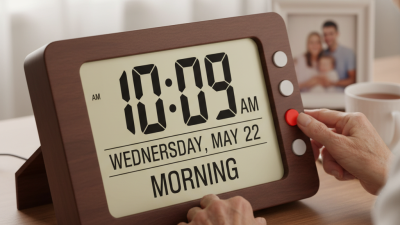
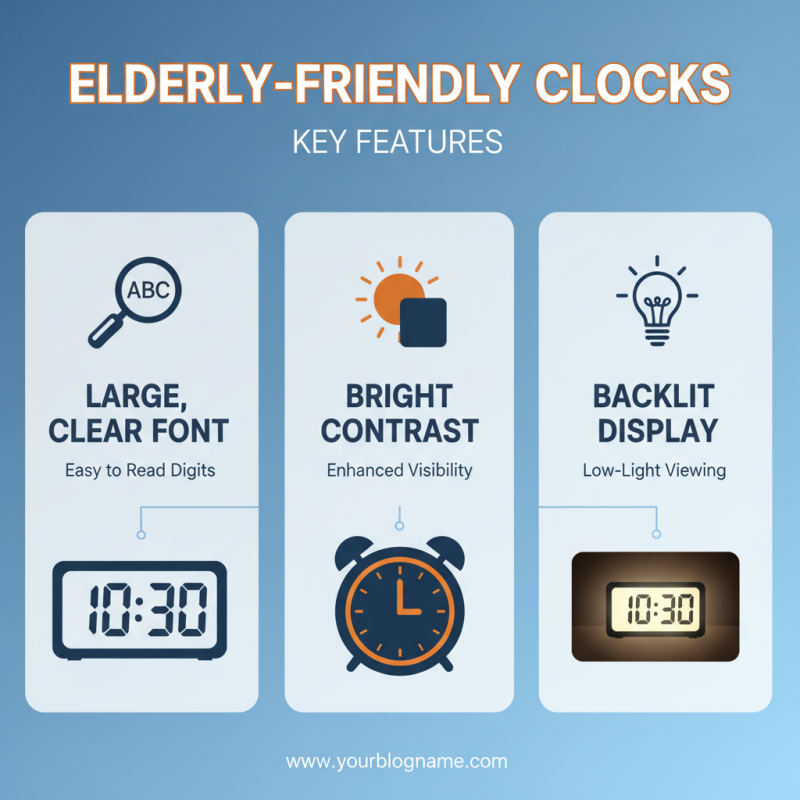
Choosing a clock for seniors requires attention to specific features. The display is crucial. A clear, large font makes it easy for seniors to read. Look for clocks with bright, contrasting colors. This enhances visibility for those with impaired vision. A backlit option can help in low-light situations.
Another essential feature is simplicity. Clocks with straightforward designs minimize confusion. Avoid clocks with multiple buttons or complex settings. An easy-to-use interface allows seniors to adjust the time without frustration. Consider models with automatic updates, so the time remains accurate.
Lastly, incorporating additional functions can be beneficial. Clocks that forecast the weather or provide alarms for medication can improve a senior’s daily routine. However, these features should not overwhelm. Balance is vital. Essential functions should never be sacrificed for extras. Reflect on these aspects to find the right fit.
Types of Clocks Suitable for Seniors: A Comparative Overview
Choosing the right clock for seniors involves understanding their specific needs. Different types of clocks serve various purposes, often focusing on visibility and ease of use.
Large display clocks with bold numbers are popular choices. They reduce eye strain and enhance readability, which is vital for seniors with vision impairments.
Digital clocks can also be beneficial. Some feature voice announcements for time reading, catering to those with poor eyesight. Alarm clocks with intuitive touch controls simplify operation.
Analog clocks remain a classic option. Some may find analog displays comforting and familiar. Interestingly, these clocks may not be as user-friendly for everyone.
Consideration of features like brightness control is important. Some clocks allow adjustments to suit different environments. This can be especially useful during the night.
It’s not uncommon for seniors to struggle with overly bright displays or unresponsive buttons. Each clock type presents its own unique set of strengths and weaknesses, leading to an essential evaluation of user preferences.
Evaluating Usability: Clarity, Legibility, and Sound Features
When choosing an elderly clock, usability is key. Clarity and legibility are crucial factors. A study by the American Association of Retired Persons (AARP) found that 78% of seniors struggle with small font sizes. Large, clear numbers make time-reading easier. Look for displays that show hours and minutes distinctly. Contrasting colors can enhance visibility.
Sound features also play a vital role. Traditional alarms can be jarring. Soft, natural sounds are often more soothing. According to the National Institute on Aging, gentle alarms can reduce anxiety for seniors. An effective clock may also offer adjustable volume controls. This feature allows users to tailor the alarm to their comfort level.
Many designs still overlook these aspects. Some clocks have features that sound impressive but confuse users. Complicated programming can lead to frustration. Seniors may miss important reminders due to unclear instructions. Evaluation of usability should be a priority in the selection process.
Budget Considerations and How to Choose the Right Price Range
When selecting an elderly clock, budget considerations are crucial. Reports indicate that prices can vary widely, often ranging from $20 to over $200. Lower-priced clocks may lack essential features. Features such as large numbers, alarms, and easy-to-read displays are often found in mid-range options, usually between $50 to $100. Higher-end models may offer additional functionalities, such as automatic lighting, which can improve usability for seniors.
It's important to balance cost and quality. A cheaper clock might save money but could lead to frustration if it's hard to read. Often, seniors benefit greatly from clocks designed specifically for their needs. According to user experience studies, clocks that emphasize simplicity can enhance daily routines.
Tips: Look for clocks with clear displays and contrasting colors for visibility. Consider models with audible alarms to assist those with hearing impairments. While it’s tempting to opt for the least expensive option, investing a little more can result in a significantly better experience for the user.