How to Choose the Best Large Display Digital Clock for Your Needs?
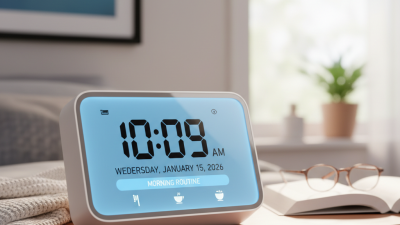
In today’s fast-paced world, a reliable Large Display Digital Clock is essential. Whether for offices, gyms, or homes, these clocks offer clear visibility and precise timekeeping. According to a recent market analysis by TechMarket Insights, the demand for large display clocks has surged by over 25% in the past year alone. This growth highlights a shift in consumer needs towards functionality and usability.
Expert in the field, Dr. John Faulkner, states, "Choosing the right clock requires understanding specific needs and environments." His insight emphasizes the importance of evaluating factors like font size, brightness, and additional features. Many users overlook these intricacies, leading to choices that may not fulfill their requirements.
Selecting an appropriate Large Display Digital Clock can be daunting. Often, potential buyers focus solely on aesthetics or price, neglecting crucial aspects. The challenge lies in balancing form and function. Evaluating the right specifications can dramatically enhance user experience and efficiency. The right clock could transform a disorganized space into a structured environment, proving the importance of thoughtful selection.
Understanding Your Display Requirements for a Digital Clock
When selecting a large display digital clock, understanding your display requirements is crucial. The ideal clock must fit your specific setting, whether it's for a classroom, a gym, or an office. According to a study by the National Institute of Standards and Technology, visibility is a significant factor. It shows that clocks with a minimum height of 6 inches can be easily read from 30 feet away. This is vital for large spaces where people may not be close to the clock.
Consider the ambient light in your environment. For areas with bright lighting, clocks with high-contrast displays perform better. A report from the Lighting Research Center reveals that glare can reduce visibility by over 50%. You may need to test different display types to find the one that suits your room best. Additionally, while many options are available, it’s essential to ensure that features align with your needs.
Think about additional functionalities. Some clocks offer timers, alarms, or temperature displays. However, more features can lead to cluttered interfaces. Research from the Consumer Electronics Association suggests that simplicity is often preferred in design. Users often overlook complex models in favor of those that provide straightforward information. This balance between display requirements and user preference is key in choosing the right digital clock.
How to Choose the Best Large Display Digital Clock for Your Needs?
This chart illustrates the preferred features of large display digital clocks based on user preferences. It includes dimensions such as brightness, size, battery life, and additional functionalities.
Evaluating Different Types of Large Digital Clocks Available
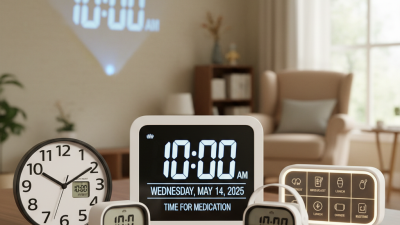
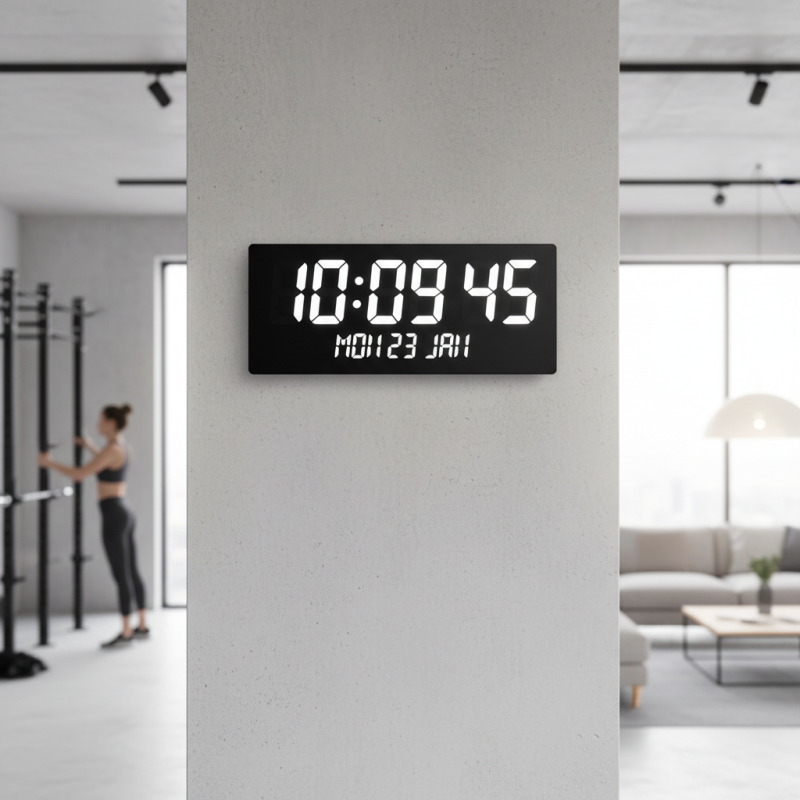
When evaluating large digital clocks, several types can meet varying needs. Wall-mounted options are common for their visibility. They typically feature large digits for easy reading. Some models come with additional functions, like displaying date and temperature. These clocks can be suitable for homes, offices, or classrooms.
Freestanding clocks are another popular choice. They can be placed on desks or floors. Their portability is a significant advantage. According to industry reports, sales of portable digital clocks have increased by 25% in the past year. This reflects a growing demand for flexible solutions. However, some users complain about battery life and maintenance efforts.
Outdoor digital clocks are designed to withstand the elements. They often use LED technology for bright displays. A recent study revealed that outdoor models with solar power options are in high demand. Yet, users should consider installation challenges. They require secure mounting to prevent damage from wind or storms. Ultimately, choosing the right clock involves balancing features, visibility, and location.
How to Choose the Best Large Display Digital Clock for Your Needs?
| Feature |
Description |
Pros |
Cons |
| Size |
Available in various dimensions (10" to 30") |
Easily visible from a distance |
Larger size may occupy more space |
| Display Type |
LED vs LCD displays |
Brightness and clarity in low light |
LED may produce glare |
| Power Source |
Plug-in vs battery-operated |
Battery-operated for portability |
Battery may need frequent replacements |
| Functionality |
Time only vs multi-function clocks (alarm, timer, etc.) |
More versatile use cases |
More features may complicate use |
| Price Range |
Budget options to high-end models |
Wide range of choices |
Higher price doesn't always mean better quality |
Key Features to Consider in Digital Clocks for Clarity and Functionality
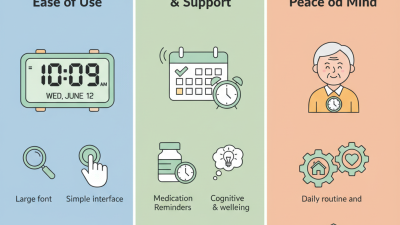
When choosing a large display digital clock, clarity is crucial. Look for a model with bright, bold digits. The size of the numbers matters. They should be easily visible from a distance, even for those with visual impairments. Consider adjustable brightness settings. A clock that dims at night can be less intrusive.
Functionality is equally important. Many models offer features like alarms or timers. Think about how you plan to use the clock. Do you need a snooze function? What about a calendar display? Some clocks include additional features, like temperature readings. This can be useful but may complicate the design.
Reflect on how the design fits your space. A bulky clock may overwhelm a small room. Choose one that harmonizes with your decor. Check if the clock easily mounts on the wall or stands on a desk. If it’s too heavy, it may not be practical. Remember, not every feature you see is essential. Prioritize what truly matters for your needs.
Assessing Display Size and Visibility for Specific Environments
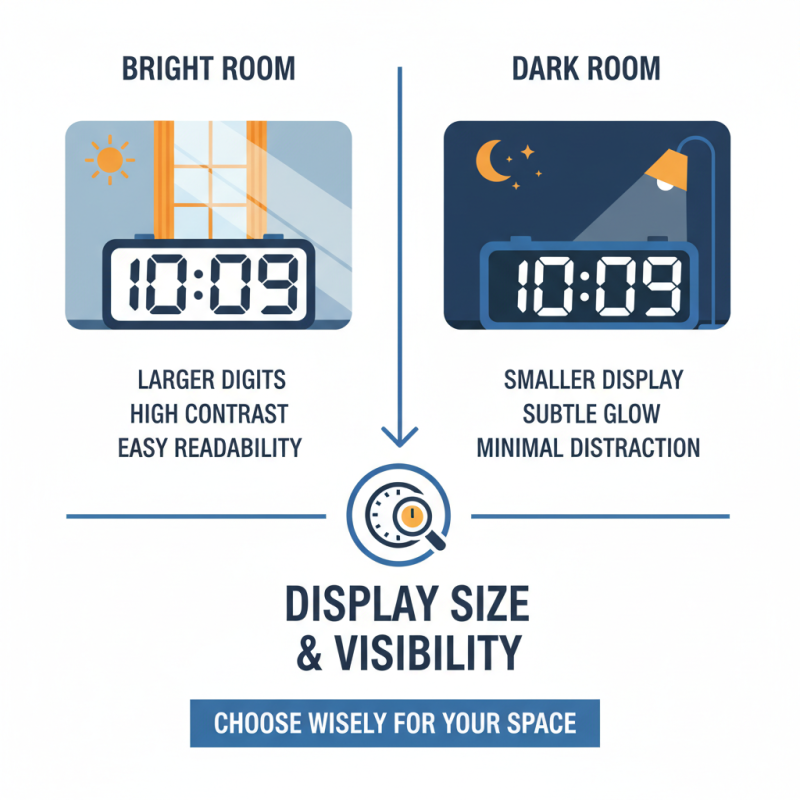
When selecting a large display digital clock, display size and visibility are crucial factors. Consider the environment where the clock will be placed. A brightly lit room may require larger digits for easy readability. Conversely, a darker space may allow for smaller displays. Each situation demands a unique approach.
In a classroom, for example, a clock that is 12 inches or larger works well. Students at the back need to see the time clearly. In contrast, an office setting might benefit from a slightly smaller size, especially if it’s placed on a wall. Make sure to evaluate how light affects visibility. Glare can obscure a clock's display, making it difficult to read.
Personal preferences can also influence choice. Some people like bold colors, while others prefer minimalist designs. Sometimes, measurements can be challenging. Double-check distances and angles before making a purchase. You may find a larger clock seems perfect online, yet too big for your wall. Take the time to assess your space carefully for the best fit.
Comparing Price Points and Brands for Best Value in Digital Clocks
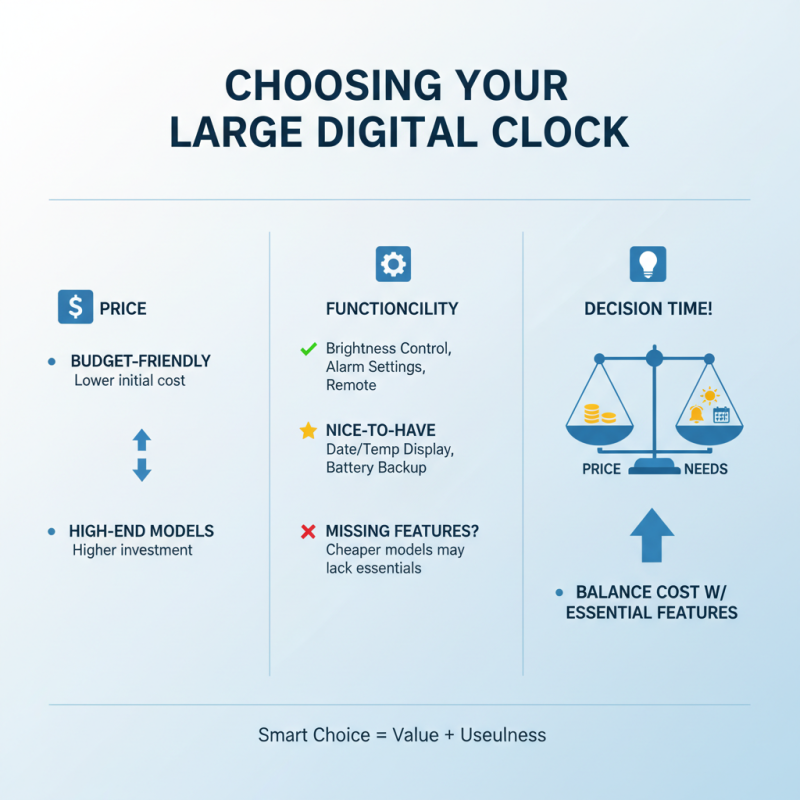
When looking for a large display digital clock, price is often a major consideration. You may find clocks ranging from budget-friendly to more expensive models. It’s easy to gravitate toward lower prices, but functionality matters too. A clock that’s inexpensive may lack essential features, like brightness adjustment or alarm settings. So, think about what you truly need as you weigh price against usefulness.
Brand reputation can also influence your decision. Some brands are known for durability, while others may focus on innovative designs. This doesn't mean that higher-priced options are always the best. An affordable clock might serve you just as well. It’s worth reading user reviews to understand the performance and reliability of different models. Keep in mind that not all flashy features are necessary for everyone.
You might feel overwhelmed with choices. Consider what aspects are vital for you. Do you need a timer or integrated Bluetooth? Or just a clear display for easy reading? Choosing a clock should align with your specific daily routines, adjusting your preferences and expectations as needed. Take your time, and don’t rush into a decision.